
Welcome to the ninth edition of VoiceMap’s newsletter, Senses of Direction.
This week, we dive into the crowded waters of Koh Samui, where the ‘White Lotus effect’ has brought a new tide of tourists. We also step inside the gleaming interior of Notre Dame 2.0, with a French YouTuber as our guide. Then, in celebration of International Women’s Day, we’ve got a story about a ‘wild’ woman who shocked 18th century Scotland by riding a sow through Edinburgh, but managed to leave her mark on the world nevertheless.
You can sign up to the Senses of Direction newsletter by entering your details below:
For your sense of the ridiculous | The ‘White Lotus Effect’
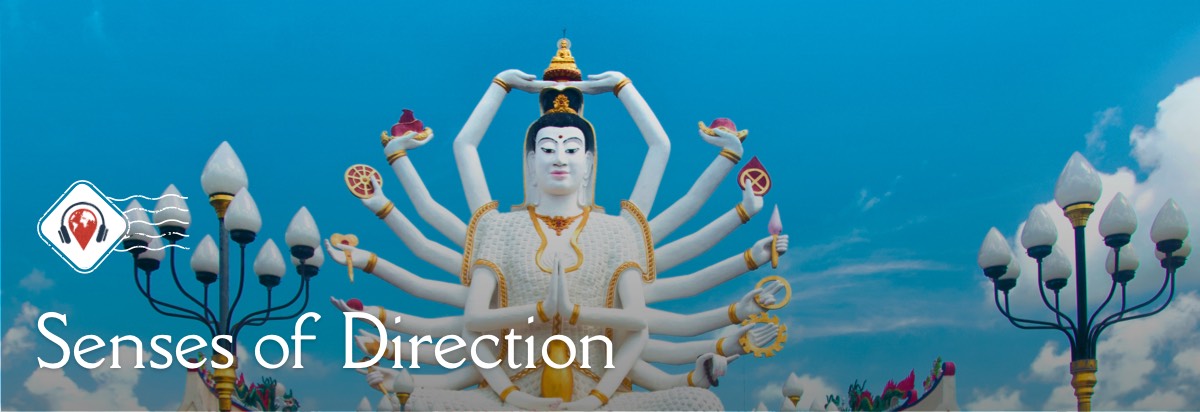
Whether or not you’re a fan of the hit HBO show The White Lotus, you’ve probably heard that its third season – which premiered last month – was filmed in Thailand, on the already overrun island of Koh Samui.
The choice has drawn plenty of attention to an important topic – namely, overtourism – and Thailand is now bracing for the surge in tourists that the ‘White Lotus effect’ has already brought to Maui and Sicily.
Japan was also high on creator Mike White’s list of filming locations, but the Thai government sealed the deal by offering tax breaks to the tune of $4.4 million in exchange for the spike in tourism revenue that’s expected from this ‘set-jetting’.
The situation is not without irony. In a recent article, Sarah Stolola reminds us about the impact of the Hollywood film The Beach, which caused enough environmental destruction in Thailand’s once-idyllic Maya Bay to warrant its closure for four years.
“Now, 25 years later almost to the day after The Beach came along, Thailand has its next Hollywood-induced frenzy on its hands, and it’s hoping to be better prepared this time around. While The Beach portrayed paradise-seekers rejecting the traditional markers of vacation luxury by starting their own commune on a secret beach, White Lotus showcases those very markers, then lampoons them.”
People from around the world have already begun planning trips that follow in the footsteps of this cast of loathsome characters. Don’t get me wrong: I want more than anything to believe that travel’s tangible and intangible benefits outweigh its downsides. But this feels like a watershed moment for overtourism. Koh Samui already gets 3.5 million annual visitors, and its local population of 70,000 endures perpetual water shortages and waste management problems.
The problem that the ‘White Lotus effect’ draws most clearly into focus is our collective poverty of curiosity. Travel is becoming less about the places we visit than about us in those places. Stodola agrees.
“Travelers have gotten away from expecting to have to adapt somewhat to a place. Shifting that mindset to expect to have to assimilate into the place that you’re going, rather than the other way around, would be a really big positive.”
🔗 Read Stodola’s thought-provoking article here, and a roundup of her recent work on the complex dynamics that overtourism brings into play – including a gifted New York Times link for Your Resort’s ‘Perfect’ Beach Is a Lie – here. If you want to delve deeper into the ways in which the economic benefits of tourism and recreation get measured by economists, this US-focused report might scratch the itch. Stodola shares a few personal thoughts on what a more sustainable tourism industry could look like in this Q&A.
For your sense of renewal | Notre Dame rises from the ashes
The fire that devastated the Notre-Dame de Paris Cathedral on 15 April 2019 went down as one of the most tragic events in recent French history. Since the over 860 year-old cathedral’s reopening in December, it’s been likened to a phoenix rising from the ashes. With bookings for group visits commencing this month, we’re sharing this charming video by French-born YouTuber Laurence Marques. It unveils the jaw-dropping restoration work that cost more than $700 million and involved 2,000 artisans over a period of five years.
Marques reveals exactly what has changed – including the now-removed centuries of grime from its stained glass windows – and aspects that were required to stay exactly the same, like the 12th century tools that cleaned its precious organ, following damage from lead dust and temperature fluctuations.
🔗 Start here for background on some of the events Notre Dame has resisted over the years, including ransacking and World Wars. Watch the ‘Touring inside’ section to learn more about the restoration work, and skip to this section to get a closer look at details like why the limestone interior appears so much whiter than before the fire.
For your sense of celebration | ‘Wild’ women in history
What better way to mark International Women’s Day today than with a selection of amusing – and often inspiring – stories about women in history? One of these is the story of the infamous Jane Maxwell, Duchess of Gordon, described as one of “the wildest romps imaginable.” She was once spotted riding a sow in the streets of Edinburgh, but is better known as the woman who gave Scotland’s revered national poet, Robert Burns, his big break.
🔗 Listen to the story here, or find other unusual tales about brave women (including Bonnie Prince Charlie’s rescuer, Flora MacDonald) from 1700s Scotland in Anna Dowling-Clarke’s thought-provoking VoiceMap tour, ‘Women Hidden in Plain Sight: Uncovering Edinburgh’s Old Town’.
Until next time, thanks for travelling with us!
Best Wishes,
Claire
Looking for a thoughtful last-minute gift? VoiceMap’s digital gift cards are a thoughtful surprise for friends and family who delight in discovery. Just add a personal message and choose your delivery date.