
Welcome to the fourteenth edition of VoiceMap’s newsletter, Senses of Direction, where we share stories from around the world that spark curiosity and stimulate your senses.
This month, we travel to Korea’s Demilitarized Zone to meet the people who live in this strange, liminal space. We also visit Rome’s wild side to find the many types of animals that have made their home in the city’s ruins.
Lastly, we put a spotlight on Nelson Mandela – who would have celebrated his 107th birthday yesterday – and share a smorgasbord of audio tracks about his life, from Stockholm to Madrid.
You can sign up to the Senses of Direction newsletter by entering your details below:
For your sense of the wild | The wild within Rome’s walls
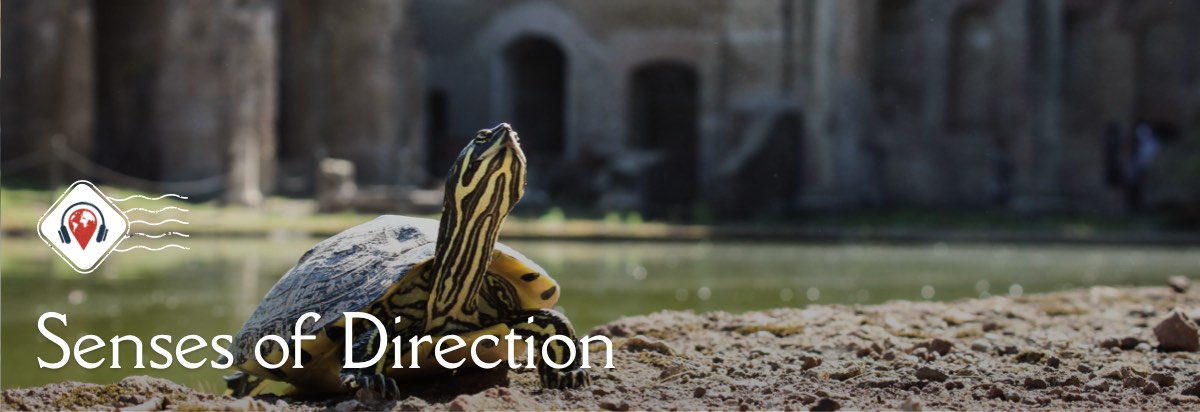
The Eternal City, where exotic species from the four corners of the earth were once brought both for trade and spectacle, is still home to a surprising variety of animals today. All wild, but not all native, this wide range of birds, mammals and reptiles “creep, slither, scurry, and nest” among the architectural ruins and palaces of Rome, using these ancient green corridors to cross the city.
An unusual new article – and its vibrant photography – shows us a different side of Italy’s capital, where “boars knock over trash bins, wolves roam the urban fringes, raptors nest atop marble pillars, and ducks tend to their eggs inside world-renowned art museums.”
Some of today’s residents, like the ring-necked parakeets from Africa and South Asia, escaped from the pet trade, in “a modern echo of ancient Rome’s role in the endless human enterprise of shuffling around species.” Others, like the Mediterranean freshwater crab, are believed to have been here since the city’s first foundations were laid.
“In 2005, archaeologists found a population of these crabs living in abandoned sewer drains below the city. Scientists determined that the crustaceans had become trapped in the sewers some 2,000 years ago when Rome was becoming urbanized and had lived there ever since – not just below Trajan’s Forum but in an entire system of canals, drainpipes, and other watery infrastructure hidden below city streets.”
? Read more about Rome’s fauna, and how residents are learning to cohabit with their long-standing nonhuman neighbors in Krista Langlois’ The Wild Within the Walls.
For your sense of boundaries | Korea’s DMZ and diaspora
The residents of Korea’s Demilitarized Zone (DMZ) have survived decades of unusual sonic violence. Some have lost months of sleep at a time, enduring an array of otherworldly sounds that are randomly broadcast from both sides of the border. There are other forms of psychological warfare too – not least the balloon propaganda campaigns that regularly make the news.
On 27 July, it will be seventy-two years since Korea’s Demilitarized Zone (DMZ) was established, beginning the longest ceasefire in history. A new article – and accompanying podcast – by a Korean-American anthropologist Teresa Yejoo Kim brings the face of this protracted conflict and its effects into sharp focus.
In the podcast, Ceasefire From the Earth and Sky, Kim interviews a former soldier and excavationist about his commitment to uniting people with their loved ones’ remains – and what it taught him about the importance of family.
In the article, Why Do Swallows Fly To The Korean DMZ? Kim recounts a recent visit to the DMZ to commemorate the 70th anniversary of the signing of the armistice. She and multiple generations of sirhyangmin (people displaced from the north) reflect on the significance of the barn swallow, or jebi, which – unlike them – can return to the northern side of the Han River estuary, come summer.
It’s easy for the human side of an ongoing saga like the Korean War to get buried beneath politics. Kim’s work brings it to the surface.
? Listen to the podcast and read Kim’s article here. For an entirely different angle, check out Paul Salopek’s latest National Geographic dispatch, My night with the guerrilla balloonists of South Korea, in which he goes inside “a covert operation to bombard North Korea with pantyhose and nature films.” (Free subscription needed.)
For your sense of freedom | Nelson Mandela Day
Yesterday was Nelson Mandela International Day, so I went through VoiceMap’s archives to look for a compelling story about the man who proved to the world that “It always seems impossible until it’s done.”
I went straight to our free tour of Johannesburg’s Apartheid Museum and found this moving track about the famous trial in which Mandela and seven other defendants were sentenced to life imprisonment for sabotage. But Mandela’s legacy extends far beyond the borders of South Africa.
One of VoiceMap’s publishers talks about his statue in London’s Parliament Square, alongside monuments to Churchill and Gandhi. Further east at the Guildhall, Churchill and Mandela were both honoured with the prestigious ‘Freedom of the City of London’ award during their lifetimes.
I learned that – like all Nobel laureates since 1901, and a string of celebrities – Mandela was a guest in Stockholm’s Grand Hotel. He also started the day of trading by ringing the bell at the New York Stock Exchange, along with an eclectic range of guests like rapper Snoop Dogg and Joe DiMaggio. In a VoiceMap walk around Cardiff, I heard about the first head teacher of colour in Wales, Betty Campbell, and how her pupils wrote letters of hope to Mandela whilst he was in prison.
If you find yourself in Madrid’s Plaza Nelson Mandela, you might spot a mural that represents one of Madiba’s famously colourful shirts or, in Glasgow, visiting Nelson Mandela Place – renamed from St George’s Square in 1986, while he was still incarcerated.
Mandela – or ‘Madiba,’ as he’s fondly known – left his mark on people and places around the world. I hope you enjoy this smorgasbord of stories and find it a helpful portal into his life and legacy.
Until next time, thanks for travelling with us!
Best Wishes,
Claire
Looking for a last-minute gift? VoiceMap’s digital gift cards are a thoughtful surprise for friends and family who delight in discovery. Just add a personal message and choose your delivery date.