
Welcome to the fifteenth edition of Senses of Direction, VoiceMap’s newsletter, where we share stories from around the world that spark curiosity and stimulate your senses.
This month, we travel to Bordeaux, where a way of life is declining alongside wine consumption. In Japan, we find out how microseasons with names like ‘evening cicadas singing’ might help us stay connected to the natural world and its rhythms. Lastly, we hear about two very different writers – George Orwell and Hunter S. Thompson – and their very different relationships to place.
You can sign up to the Senses of Direction newsletter by entering your details below:
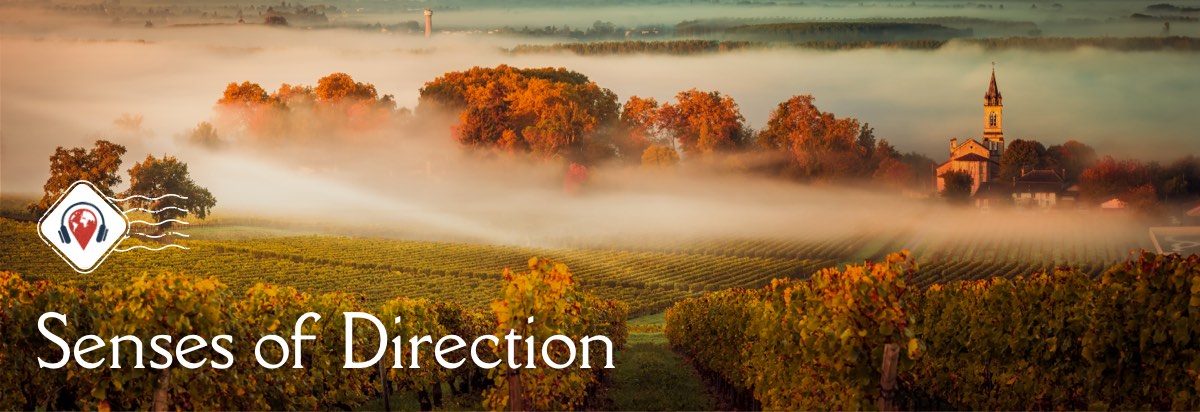
For your sense of tradition | French wine’s uncertain future
During the pandemic, ninth-generation wine farmer Loïc de Roquefeuil began talking seriously to his four children about succession at his Château Castelneau in Bordeaux.
“We have worked this land for nine generations,” he said. “I wanted to arrive at the tenth.” The junior de Roquefeuils gave him an unequivocal answer: “It is too complicated; it is not lucrative enough; we will not take Castelneau over. Papa, you have to stop.”
So effectively, he has.
Half of French winemakers will retire in the next 10 years, and there simply aren’t enough young people who are willing to replace them. In Why doesn’t anyone want to make French wine anymore? writer Josephine de La Bruyère travels to Bordeaux to meet families like de Roquefeuil’s, whose generations-long winemaking tradition is coming to a sad end.
From the drying up of wine consumption around the world, to the 15 percent tariff that the EU conceded to pay in a new trade agreement with the Trump administration, several forces seem to be conspiring against France’s wine industry.
The latest blow was the wildfires that devastated southern France last week. The cruel twist? In the sun-seared Aude region, where the blaze began, farmers dug up nearly 5,000 hectares of vineyards over the past 12 months, removing a natural, moisture-rich firebreak in response to government subsidies that address the over-supply of wine.
? Get a sense of the human face behind French wine’s decline in this article, which also explores contemporary challenges like “French youths’ growing affinity for tapas and happy hours,” and read about trends like the preference for beer over “the powerful, tannic reds for which Bordeaux is known” here.
For your sense of the seasons | Japan’s 72 microseasons
Next month is one of Japan’s two most popular travel seasons, when vivid autumnal colours and mild weather draws almost as many travellers as the country’s famous ‘cherry blossom season’. But the concept of seasonality in Japan is far subtler than Summer, Autumn, Winter and Spring.
The sense of time and place that the changing seasons create is one of the themes that Ligaya Mishan, chief restaurant critic for The New York Times, explores in this enchanting, multi-layered – and somewhat esoteric – article Why Japan Counts 72 Microseasons.
Right now, we’re in “evening cicadas sing,” a five-day microseason, or ko, that ends tomorrow.
“As there are microseasons within each season, likewise within the life of an ingredient,” writes Mishan, who interviews some of the country’s most talented chefs. For 42-year-old restaurant owner, Yoshihiro Imai, the vegetables write the menu, he says.
“At the beginning of June, the first Kamonasu eggplant arrives,” he says, referring to a prized local variety that’s the inky purple of a bruise. “And for a thousand years, people have said the same thing: ‘Now it is summer.’”
In a world where many of us have become disconnected from the seasons – “as advances in technology create the illusion that we’ve triumphed over time and place” – Mishan’s article is both humbling and energising.
? Read the piece here, or on the New York Times site here (subscription required)
For your sense of place | Orwell’s Hampstead and Hunter S. Thompson’s ‘Fat City’
There’s a bakery in London’s leafy Hampstead neighbourhood where, if you pause for a second, you’ll see a plaque and a sculpture of George Orwell, the writer of Animal Farm and 1984. They mark the former site of Booklovers’ Corner, a second-hand bookshop where Orwell worked for fifteen months, until the end of January 1936. Just as his shifts at Booklovers’ Corner gave shape to his days – with “mornings free to write and his evenings free to socialize or write” – so too did Hampstead give shape to the man Orwell became.
We get a sense of Orwell’s relationship to the place where he met his future wife and found inspiration for one of his novels in bestselling author Paul French’s new VoiceMap.
Across the Atlantic in Aspen, you can hear about the world famous journalist and author Hunter S. Thompson’s very different attitude to a place he called home – and where he campaigned to be Sheriff of Pitkin County. The father of gonzo journalism pushed for – among other things – the legalisation of drugs for personal use and, hilariously, the renaming of Aspen to “Fat City” to deter investors.
? Listen to the track about Booklovers’ Corner or the whole tour here, which was born out of BBC Radio 3 documentary, A Chinese Odyssey: Artists, Poets and Exiles in Interwar London. You can hear the wacky story about Thompson’s campaign for Sheriff in Sonja Kelly’s new VoiceMap, or listen to the whole tour here.
Until next time, thanks for travelling with us!
Best Wishes,
Claire

Looking for a last-minute gift? VoiceMap’s digital gift cards are a thoughtful surprise for friends and family who delight in discovery. Just add a personal message and choose your delivery date.