Weirdly Human: Art, AI, and the Future of Self-Guided Audio Tours

When I started VoiceMap over a decade ago, I ran a Twitter poll asking what people thought of when they heard the phrase “audio tour.” 

Twitter is now X and its archives don’t go back far enough for me to see what all the options were, but I do remember that the overwhelming response was “a dusty museum.” In other words, “audio tour” brought to mind push-button devices with battered headphones and a voice that sounded like a newsreader reciting from an encyclopaedia.

VoiceMap was built to offer the opposite, with great tech that gets out of the way and shows you the world through the eyes of another human. In the age of AI, that founding principle has taken on new significance.

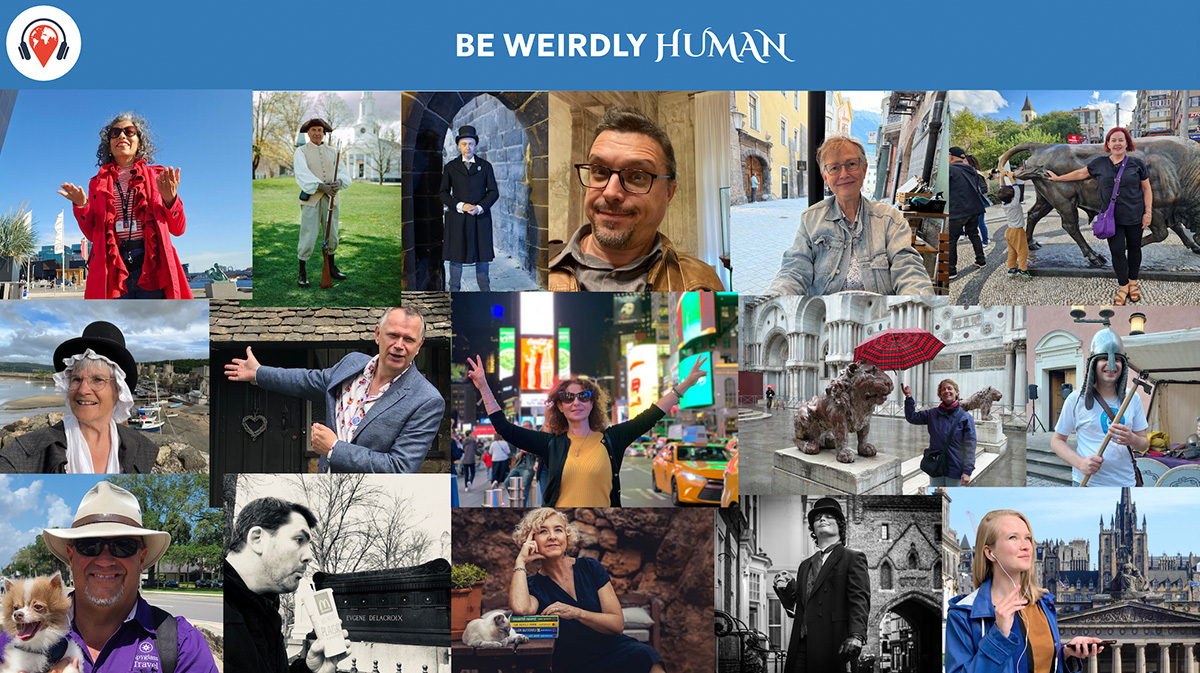
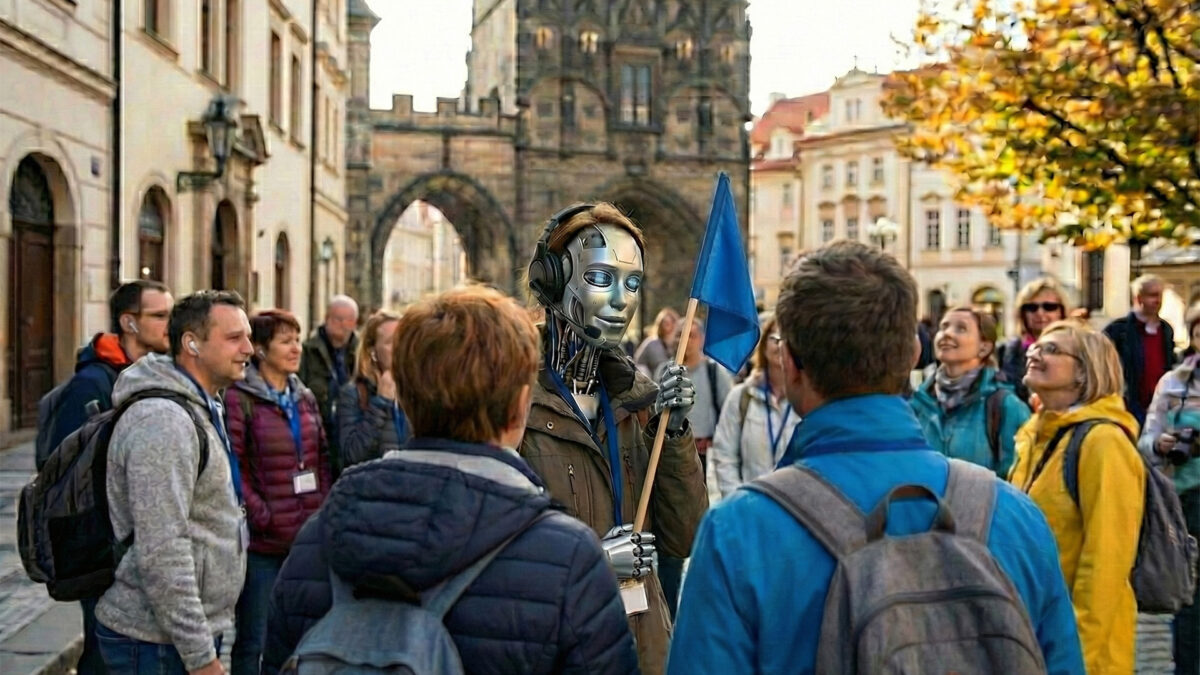
At our January webinar, we asked an existential question. What makes human-created tours irreplaceable when AI can generate content in seconds? The answer is plenty – and it’s backed up by neuroscience, spatial awareness, and the inimitable weirdness of human experience.

Below are some key insights from the session, along with practical guidance on where AI can help – and where human creativity becomes our greatest competitive advantage. There’s also a video recording of the entire webinar just below.

Continue reading Weirdly Human: Art, AI, and the Future of Self-Guided Audio Tours

The 27 Best Travel Apps for Your 2026 European Adventure

The travel industry loves a portmanteau. In the last couple of years alone, we’ve been introduced to Coolcationers (people fleeing summer heat for Scandinavia), Set-jetters (visiting locations where films or TV shows were set, like the ’White Lotus effect’). Then there are devotees of Hushpitality: the pursuit of silence as luxury. (Yes,really).

I’ll confess: I rolled my eyes at most of these. And then I caught myself booking a week in the Norwegian fjords specifically to escape the southern hemisphere’s summer heat – which, it turns out, makes me a Coolcationer whether I like it or not.

All of which is to say: the way we travel is shifting, and so is the toolkit. And, somewhere along the way, our phones have become the most reliable member of any travel party. Gone are the days of misplacing physical maps and feeling lost, or flicking through pages and pages of bookings and reservations. Our phones store everything for us, just a few taps away. 

But not everyone travels the same way. Some of us seek out the quirky, unusual and off-the-beaten-path sites; others want to visit a great-grandmother’s village in rural Poland. There are collectors ticking off UNESCO sites, retirees who find group tours exhausting, booklovers going on their own literary pilgrimages, and independent travellers searching for connection without the crowds.

So, whether you’re a city-hopper, cultural deep diver, or a slowmadic (slow travel) wanderer, here’s what’s actually worth downloading, organised by the kind of traveller you might be.

Continue reading The 27 Best Travel Apps for Your 2026 European Adventure

Upcoming Webinar | Weirdly Human: AI and the Future of Audio Tours

In November 2025, two very different albums were in the charts at the same time. One was made by an AI-generated artist that critics called “laughably generic.” The other took Rosalía three years to make, features the London Symphony Orchestra, and has her singing in 13 languages – a feat she emphasised involved no artificial intelligence at all. “The more we are in the era of dopamine,” she told the New York Times, “the more I want the opposite.”

This tension – between what AI can produce and what only humans can create – is playing out in audio tours too. If your tours sound neutral and interchangeable, like an encyclopaedia, then yes, AI can replicate them. But neuroscience research suggests there’s something measurably different about personal, first-person storytelling: it literally synchronises the listener’s brain with the speaker’s, triggers the release of trust hormones, and persists in memory long after polished facts have faded. Imperfection and vulnerability aren’t weaknesses to hide. They’re your greatest competitive advantage.

Continue reading Upcoming Webinar | Weirdly Human: AI and the Future of Audio Tours

Publish in these key destinations or attractions and earn 80% royalties

Publish a tour at one of the attractions or destinations listed below by 31 March 2026 and you’ll earn 80% royalties through the end of June 2026. You’ll also receive $200 USD in marketing support, including a free Viator listing, a boosted Instagram Reel, and Google Things to Do ads.

Through our royalty programme earlier this year, we added tours in 36 new destinations, with many creators producing multiple tours. Some, like A History of Italy Podcast and Mark Whiteley in Portugal, published four tours each across different cities.

Some of the top-performing destinations included Ålesund, Norway, Messina, Italy, and Birmingham, UK. These tours quickly found their audience, with publishers often receiving their first royalty payments within just a few weeks – particularly in smaller cities and port towns where there’s steady visitor demand but limited guided tour options. For 2026, we’re expanding the programme to include popular attractions and themed tours as well.

Continue reading Publish in these key destinations or attractions and earn 80% royalties

How VoiceMap tours deliver consistent revenues over time

When publishers and content creators decide where to invest their time and resources, one question matters above all: How long will this content continue generating revenue?

In traditional book publishing, the answer is sobering. Most books follow what researchers call an “early peak, slow decay” pattern – a brief surge of sales followed by a steady decline into obscurity. But location-based audio content tells a dramatically different story.

I joined VoiceMap after 10 years in the podcast industry, which follows a similar distribution pattern to books. The longevity of VoiceMap audio tours was a welcome surprise to me, with many delivering increasing revenues year after year. It’s not just podcasts; YouTube videos and social posts also have very short lifespans – and many peak in just hours or days.

Publishing once and monetising over the long term is really attractive – especially when you consider that creating a VoiceMap tour doesn’t require a lot more effort than producing a single scripted podcast episode.

Continue reading How VoiceMap tours deliver consistent revenues over time

Get 100% royalties when you publish in key destinations

If you produce a tour in a key destination, listed below, and you publish it by 31 May 2025, you’ll earn royalties at 100% until the end of August. You’ll also get marketing worth $200, including a free Viator listing, a boosted Instagram Reel, and Google Things to Do ads.

We’re making this offer because of the potential we’ve seen to publish tours that sell well immediately. Over the last twelve months, VoiceMap has added 83 new destinations to the almost 500 it now offers globally. When those destinations were strategic, with data pointing to existing demand and network effects from our other tours in the region, the publishers often received their first royalty payments in just a few weeks. This has been especially true for smaller cities and towns, where there is a constant stream of visitors, but not quite enough for a regular guided tour.   

How to Qualify

  • Your tour must be in one of the destinations on our Key New Destinations, below.
  • You need to complete a short form, sharing your tour’s destination and the email address linked to your VoiceMap account. You’ll find that form here.
  • You must publish your tour by May 31, 2025. 

Most of the destinations on our list are in Europe, and we recently added destinations in Canada, the Mexico, and the US. 

Continue reading Get 100% royalties when you publish in key destinations

How is ChatGPT going to change self-guided tours?

I often get asked if I’m worried about ChatGPT and tools like it. Last week, at Arival and ITB in Berlin, this was the first question from most people I met. 

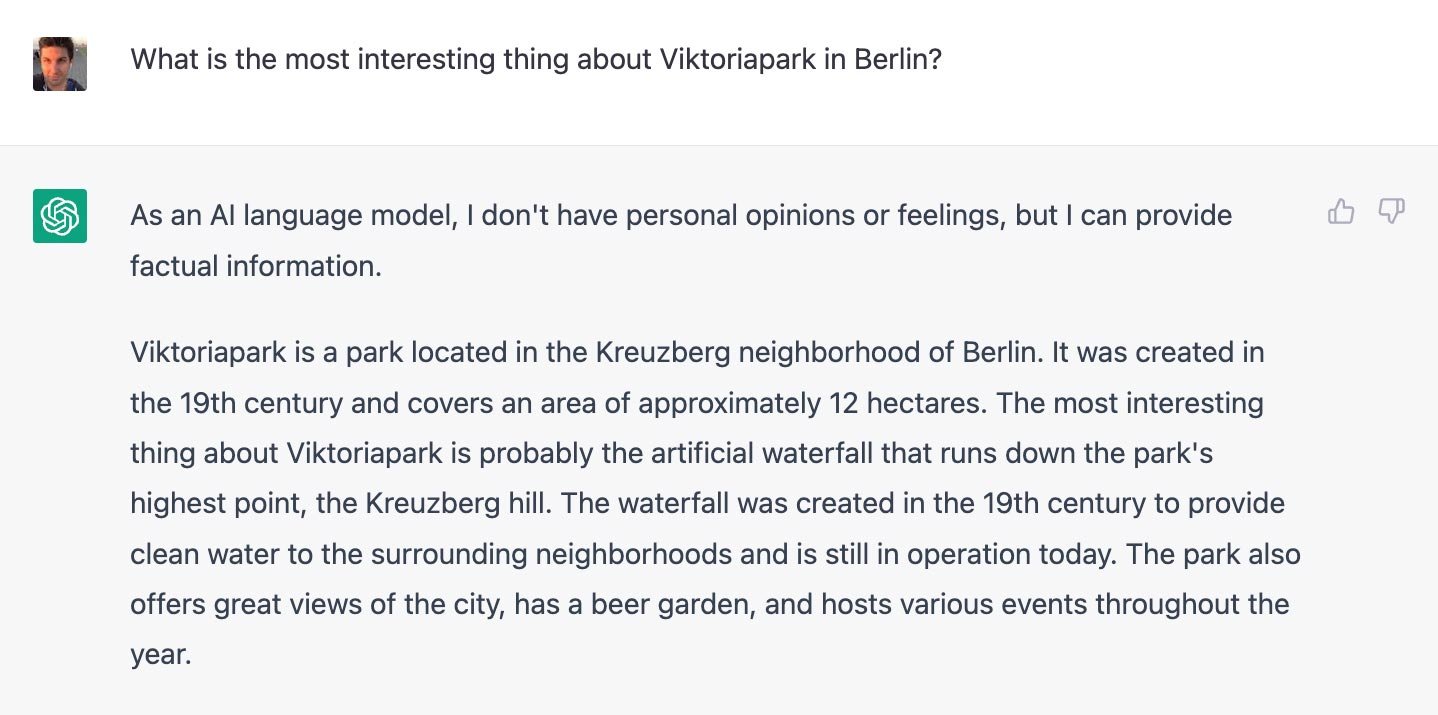
Then, when I got home, this article by Selene Brophy was published. I thought back to a VoiceMap tour I had just done in West Kreuzberg, passing through Viktoriapark. It was nearly perfect, with a surprising route and so much more than just facts. The publisher, Beata, was obviously overflowing with anecdotes and observations about this corner of Berlin, but she was sharing an infectious passion for the city too.  

Could ChatGPT simulate Beata? I opened it up on the day GPT-4 became available and asked it. 

Continue reading How is ChatGPT going to change self-guided tours?