
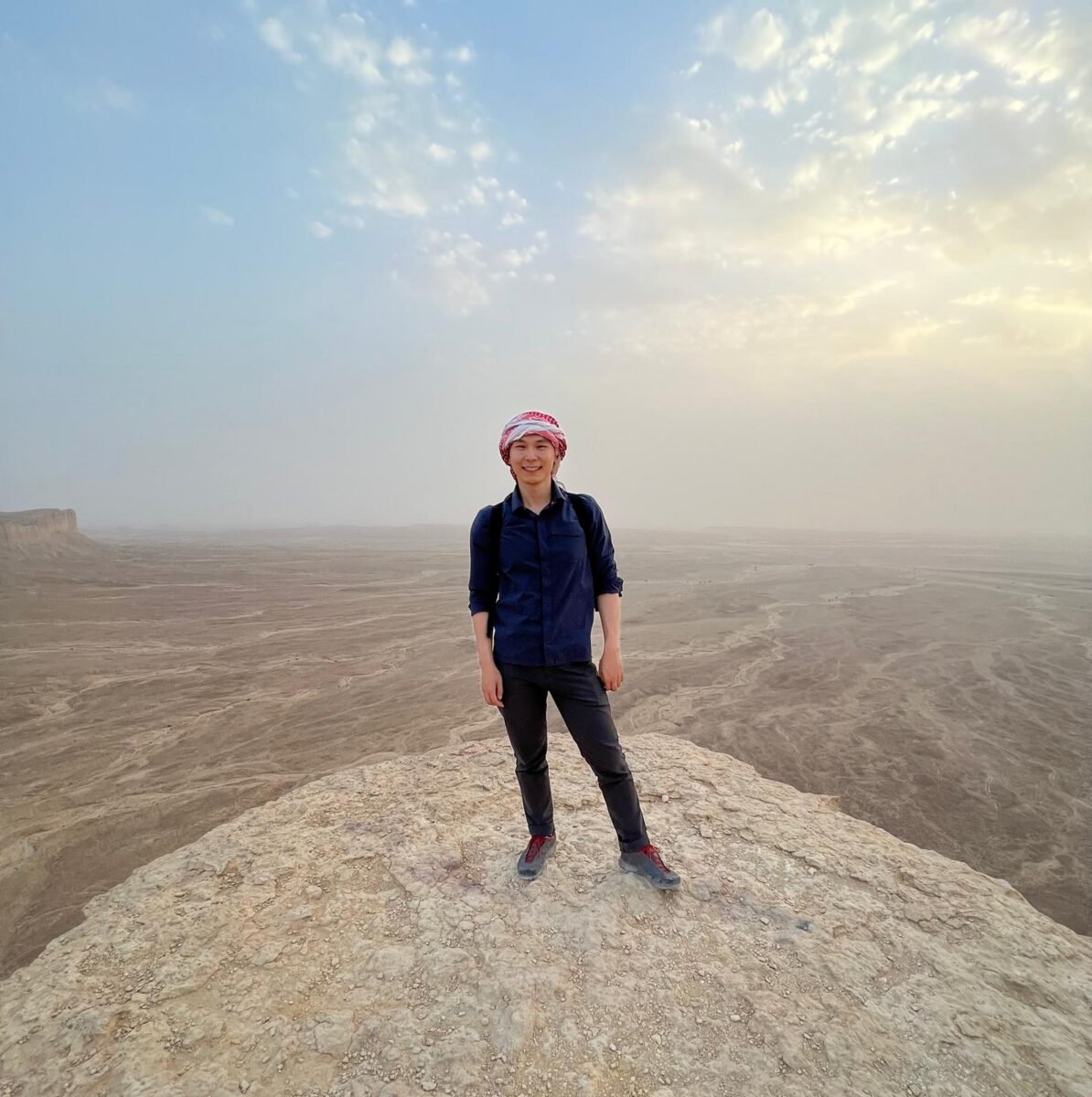
Yao Zhao is one of those people who seems to be perpetually travelling. Originally from Chongqing in southwestern China and now based in Washington, DC, these days, he spends roughly three months abroad each year.
He’s got piles of energy and runs his business, 50Hertz Tingly Foods, from anywhere in the world – yet he’s also drawn to slowing down on remote islands, and going nowhere in particular. He’s the instigator behind ambitious trips with his many friends as often as he strikes out alone, and has a remarkable talent for making new ones wherever he goes. He’s taken VoiceMap tours in around twenty destinations around the world.
This is the first interview in a new blog series, How We Travel, in which we speak to VoiceMap’s community of curious explorers about how they travel.
What do you always pack that other people find strange?
I pack slippers – portable travel-size Muji slippers. I always want to wear slippers indoors, around the house. It’s very ‘Asian’ of me!
Why do you travel?
I’m a very curious person, and travel fulfills that part of me. I particularly like myself when I’m travelling. I become very creative, uninhibited, curious, and I ask a lot of questions – much more than when I’m at home. Travel makes me a better version of me, to some extent.
Has a trip ever changed how you see things?
The solo backpacking trip I did when I was 20 or 21 really changed me. I was supposed to become a Chinese diplomat, and I told my family I was going backpacking across Asia instead. They were horrified.
I broke free from familial obligations and expectations, and afterward I felt confident and fearless.
The most memorable part of the trip was across India, from Kolkata all the way to Rajasthan over a month or so. It was dirt cheap — trains, overnight buses, bucket showers, $2 hostels — but it was so freeing and alive.
Do you generally feel ‘time-rich’ or ‘time-poor’ when you travel?
It really depends on the trip. Last month I was in New York for a trade show and I had almost no time. But in general, I feel time-rich because I’m an optimist, and I’m always optimising my calendar.
Let’s say I have three hours in Frankfurt – what do I do? I might feel a bit aimless, but if there’s a one-hour audio tour covering a topic I’m interested in, I have a roadmap. In those circumstances – when I’m objectively ‘time-poor’ – that’s when I use VoiceMap the most, and it makes me feel ‘time-rich’.
You often return to places, rather than always chasing somewhere new. Why is that?
Places like Spain, France and Indonesia are big countries with real depth and multiple regions, each of which is different. Returning also updates your view of a place.
I often travel to places where friends live so I can eat at local restaurants and get a real sense of things. If you don’t know anyone, you have to do all the research, and sometimes what you learn online is really out of touch with reality.
Do you know how many countries you’ve been to?
I think it’s somewhere north of 50, but I genuinely don’t know. I’m not chasing a number… Indonesia alone I’ve visited so many times – it’s a big country.
These days, do you travel solo or with other people more often?
These days it’s about half and half. When I’m actually taking a holiday, I’ll usually ask friends to join. I also run a small business now, and people always ask, “Is it a business trip or a fun trip?” To me it’s all the same: yes, I’m going to San Francisco for a trade show, but I make sure I have time to see things or people I want to see.
I work really hard, but I control my own schedule. Even with corporate travel, if you have an explorer’s mindset, you can always squeeze in a run before breakfast.
How much do you plan a trip in advance?
I don’t do meticulous planning. I plan the bigger framework. I know where I’m going to stay on each day, but I always book refundable accommodation in case I want to change my mind. And I always leave something like an afternoon open.
How do you decide where to go next?
It’s very random. I have a rough list of places I want to go: Iraq, Syria, Namibia… But I’m someone who could go anywhere. There’s no place I wouldn’t go, but there are places I’m especially eager to visit – like Iraq or El Salvador – that have just opened up and aren’t inundated by commercialism…
It can also be inspiration-driven. I’m organizing a trip to Komodo next August because I’ve always wanted to do a ‘live aboard’ diving trip. A former World Bank colleague who knows Indonesia really well recommended a boat, the pricing looked right, and it looked like genuine hospitality similar to Raja Ampat, so I said “let’s do it!”
When did you first realise that you love solo travel?
My first travel experiences were all solo. After volunteering at the Beijing Olympics in 2008, I had about two weeks left before school started. So I went on my first backpacking trip – solo – on the Chinese Silk Road.
I met a group of four friends in an online chat room and joined them for a while, so I was sort of the extra person, but we gelled so well. I’m still friends with some of them to this day – almost 20 years later.
Then I went backpacking on my own in India and Southeast Asia – which was ‘solo travel’ but, again, I met people along the way.
What made you choose India, and Kolkata in particular?
It was quite spontaneous. I read a book by a Chinese author who had spent some time volunteering at Mother Teresa’s Missionaries of Charity. I was inspired, and booked a flight from Bangkok to Kolkata.
Kolkata is probably being thrown in the ‘deep end’… At the time, the city had a lot of refugees from West Bengal. I remember walking to get dinner as the sun was setting, hearing crows making a very depressing sound, and seeing so many people sleeping on the street – I thought they were dead.
I volunteered at the ashram, caring for people who are dying. I’m not religious at all, and most volunteers there are devout Catholics from all over the world. It was a bit too much for me to be honest. But it got me to Kolkata, and I got curious about the rest of India.
I left after a week or two, made friends, and started travelling by train to Bodh Gaya – and then continued west with new friends I’d met.
***
Look out for our next interview in the How We Travel series, which features a couple who have made slow travel their new way of life. If you have an interesting perspective on travel to share, send a message to claire at voicemap.me.
